


The Toro Company
•
2026
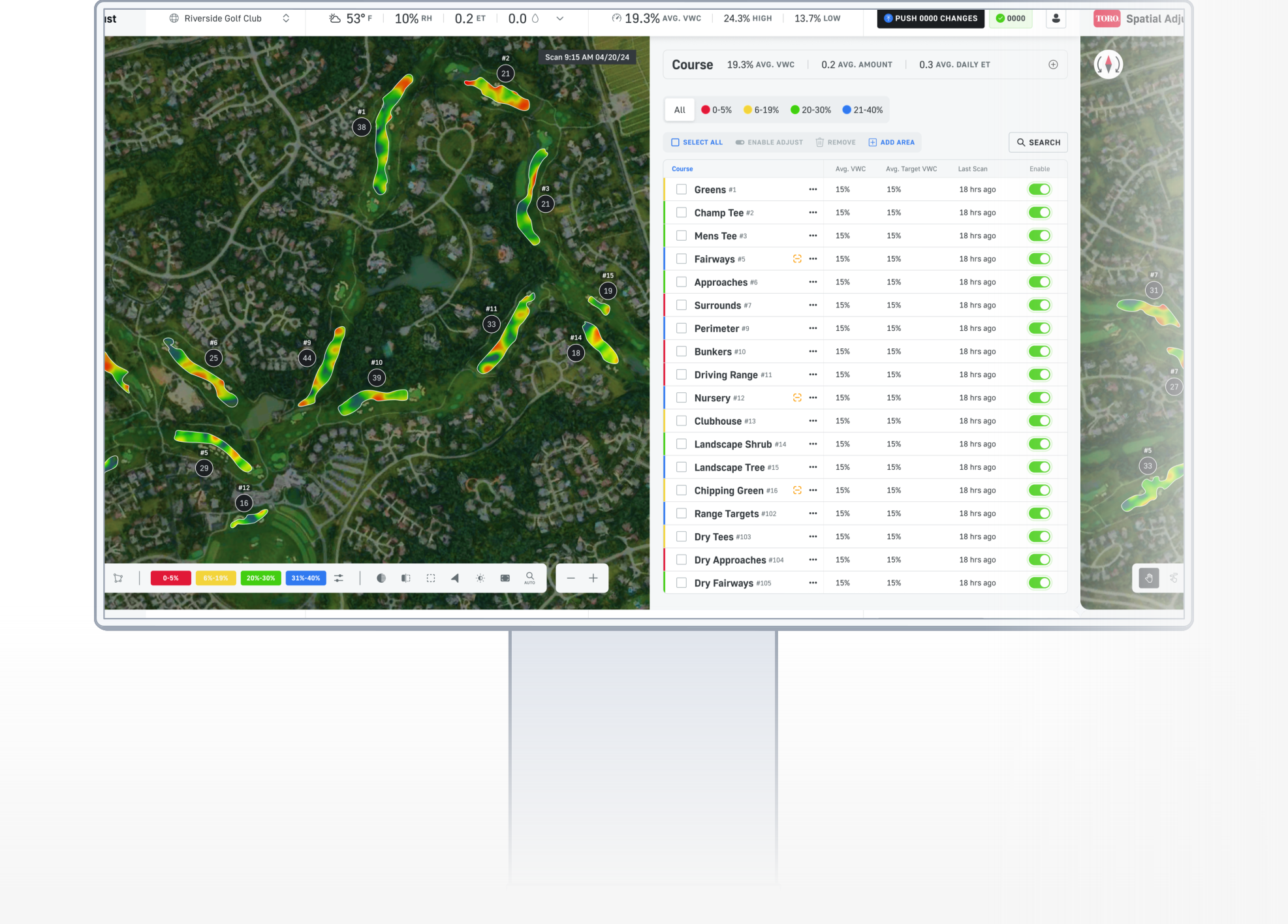
Spatial Adjust is a concept for helping irrigation teams interpret TurfRad sensor data and apply confident watering adjustments directly from a spatial interface.
As Senior Designer, I shaped the product concept, interaction patterns, and visual flows that turn dense telemetry into map-based recommendations, review states, and override controls for experts in the field.
This case study focuses on how we made AI-driven adjustment logic understandable, inspectable, and operationally safe.
Senior Designer
Concept Definition
UX/UI Design
Spatial Interaction Design
Prototyping & Validation
Patent Support
Product Management & Engineering
Agronomy & Sensor Specialists
Superintendents & Irrigation Leads
Toro had the sensor data. Superintendents needed a safe way to turn it into confident watering decisions.
Spatial Adjust connects TurfRad soil-moisture readings, weather forecasts, and course geometry into an AI-assisted recommendation flow. The goal was not to replace expert judgment. It was to make dense telemetry readable enough for experts to inspect, adjust, and approve in the field.
The design work focused on the trust layer: map-based reasoning, confidence signals, clear recommendation drivers, and override paths that kept the superintendent in control.
Spatial Adjust translates TurfRad sensor data into an actionable, override-friendly map interface.
A recurring theme from superintendent and irrigation lead conversations.
Raw moisture data was useful only when the system could explain the next action.
Hardware sensors can capture millions of readings across a course, but superintendents do not make irrigation decisions from raw tables. They compare weather, turf conditions, zone history, crew constraints, and course priorities. When an algorithm recommends a major watering change, the interface has to prove the recommendation is reasonable before asking for approval.
TurfRad created rich soil-moisture signals, but the value was locked inside spatial and temporal patterns that were hard to scan quickly.
Experts were open to AI, but only if the recommendation showed its evidence and never hid the override path.
Wrong recommendations could damage turf, waste water, or create maintenance problems across a large property.
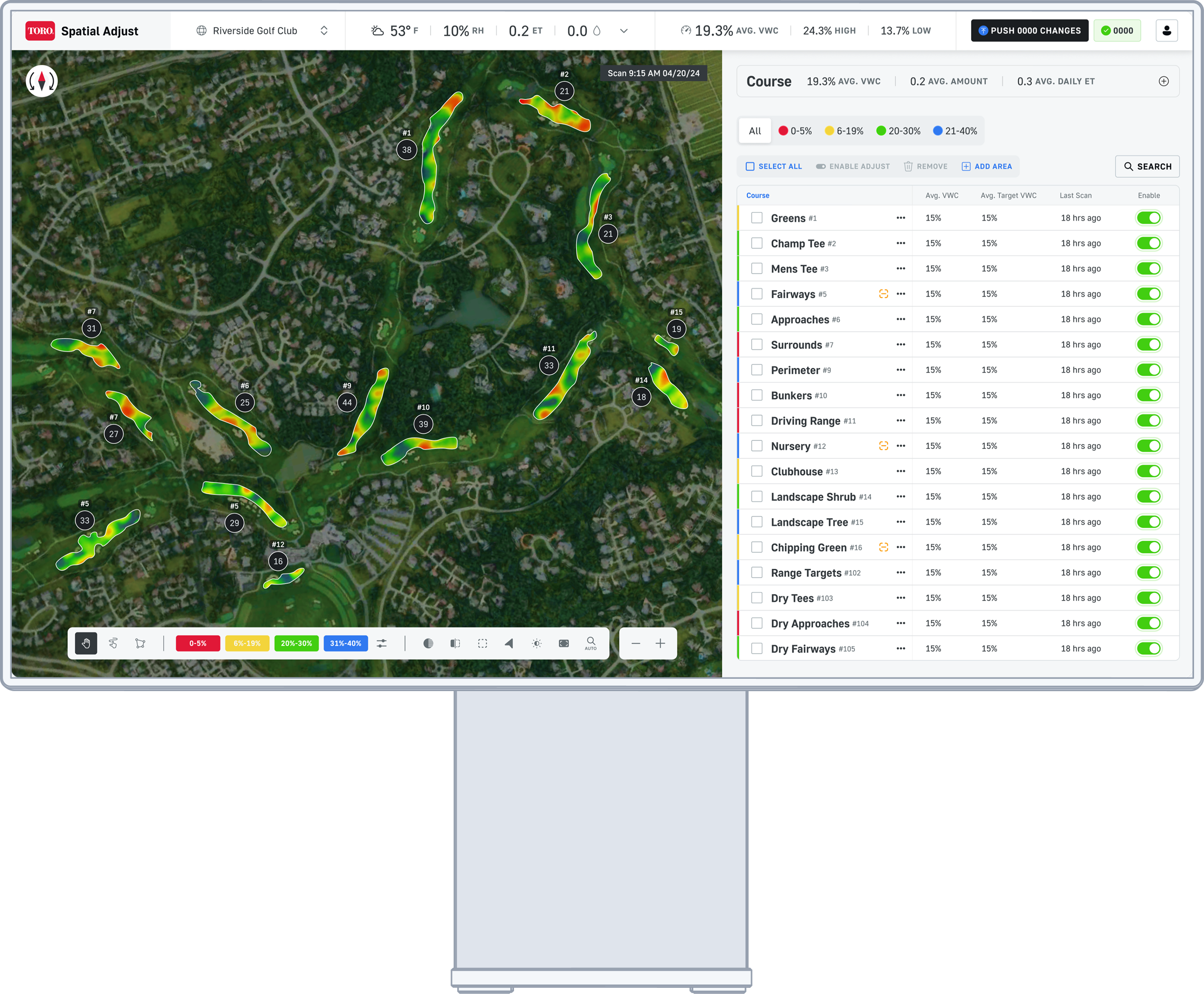
The web experience anchors recommendations in course context instead of presenting them as isolated system decisions.
The research signal was consistent: experts would use AI recommendations if they could see the reason, confidence, and escape hatch.
superintendents reviewed map readability and override behavior.
agronomy and irrigation specialists tested recommendation logic.
product and engineering partners aligned on scope and technical risk.
We used those conversations to separate the interface into three responsibilities: make the pattern visible, make the reasoning legible, and make intervention easy.
The product could recommend, but the expert always had to understand and govern the recommendation.
Recommendations expose the sensor readings, forecast inputs, and affected zones that triggered the change.
Users can accept, edit, or reject from the same review context instead of hunting through advanced settings.
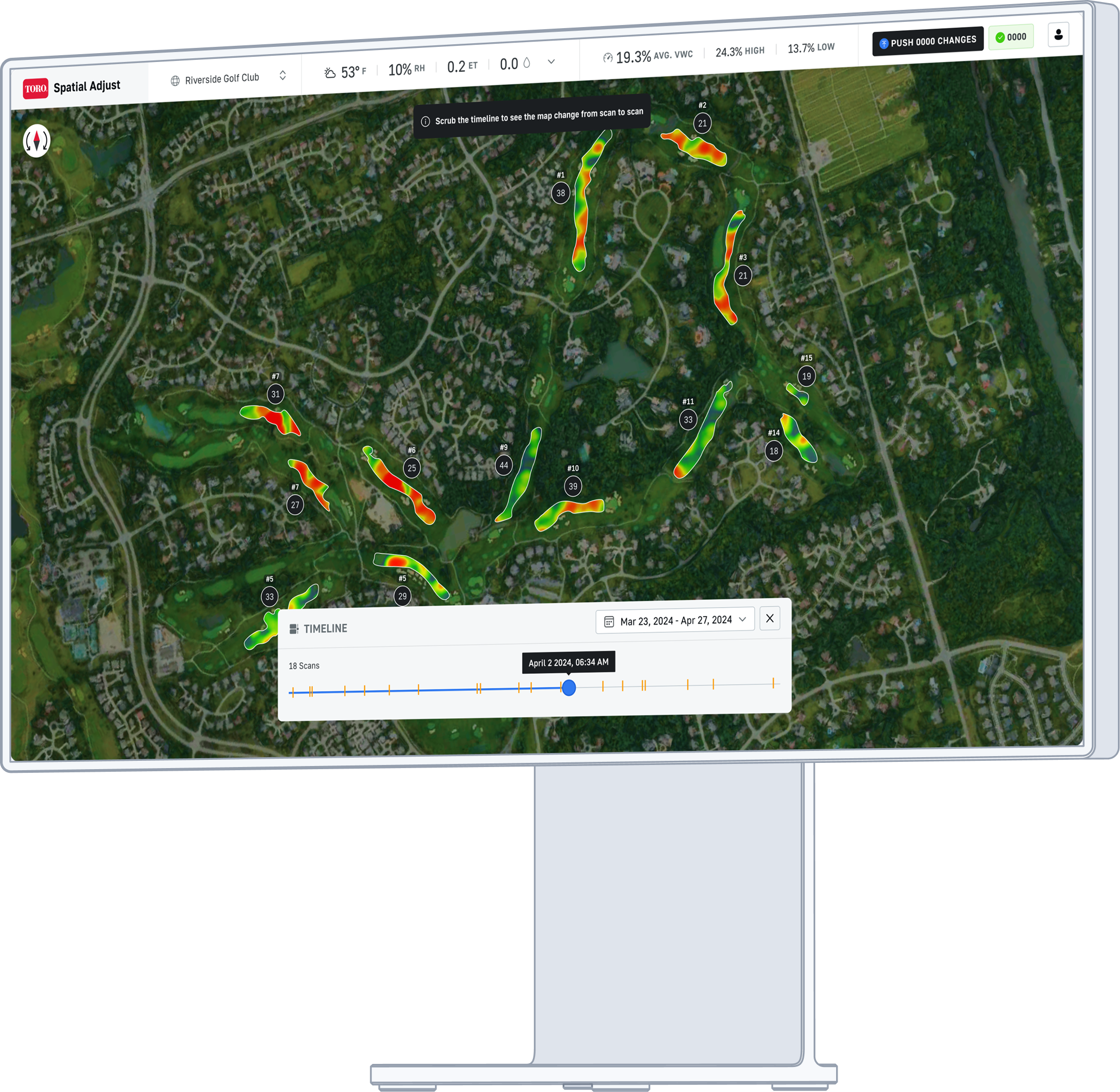
Course-level heatmaps turn abstract telemetry into visual stress patterns tied to actual turf areas.
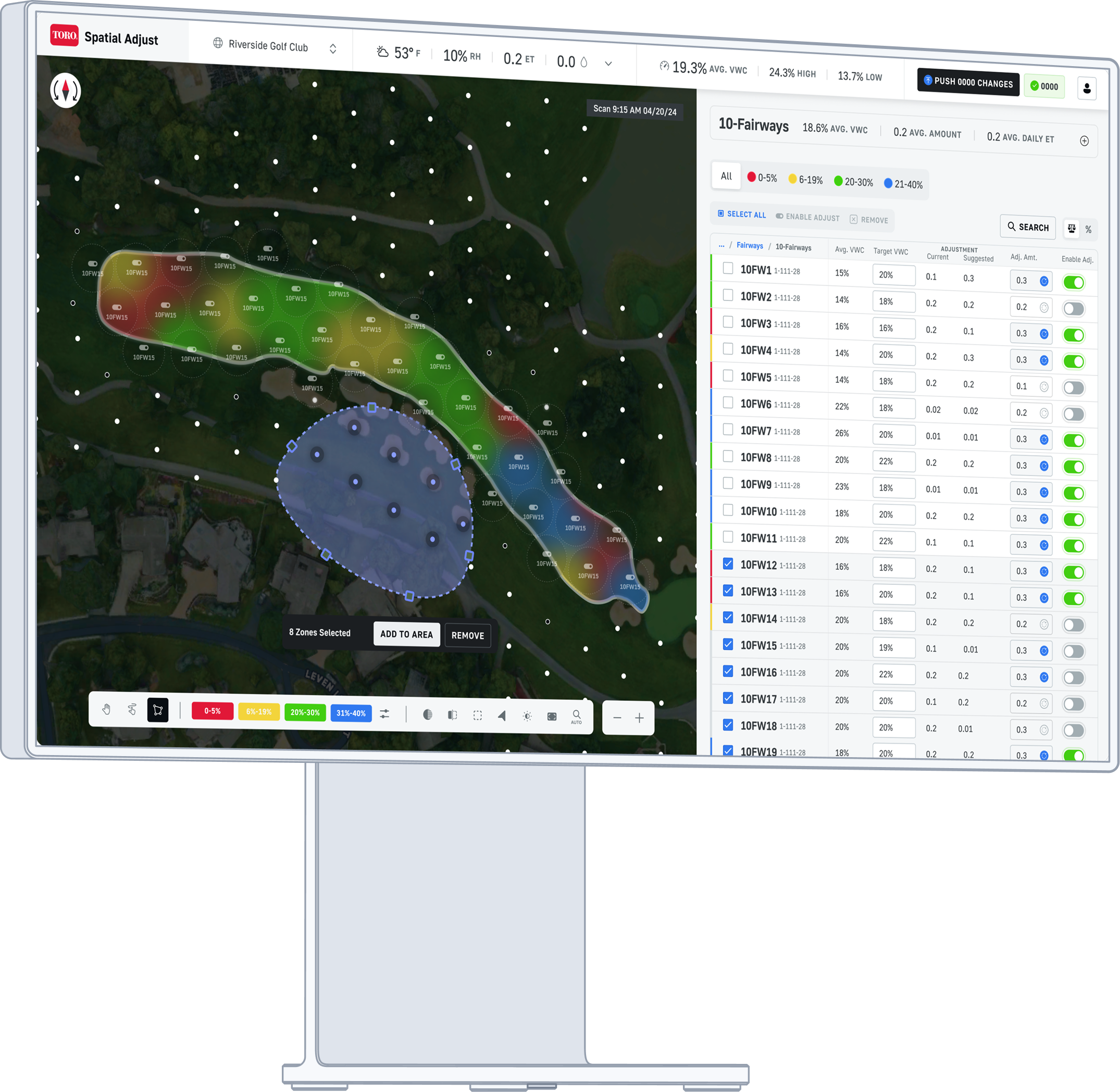
Recommendation review combines spatial evidence, confidence cues, and direct controls in one decision surface.
We made the map the primary review surface so superintendents could see where stress was happening before looking at recommendation details.
Heatmaps make moisture gaps visible across fairways, greens, and zones.
Recommendations stay tied to real turf areas, not disconnected rows of data.
Teams can spot what needs attention before opening deeper controls.
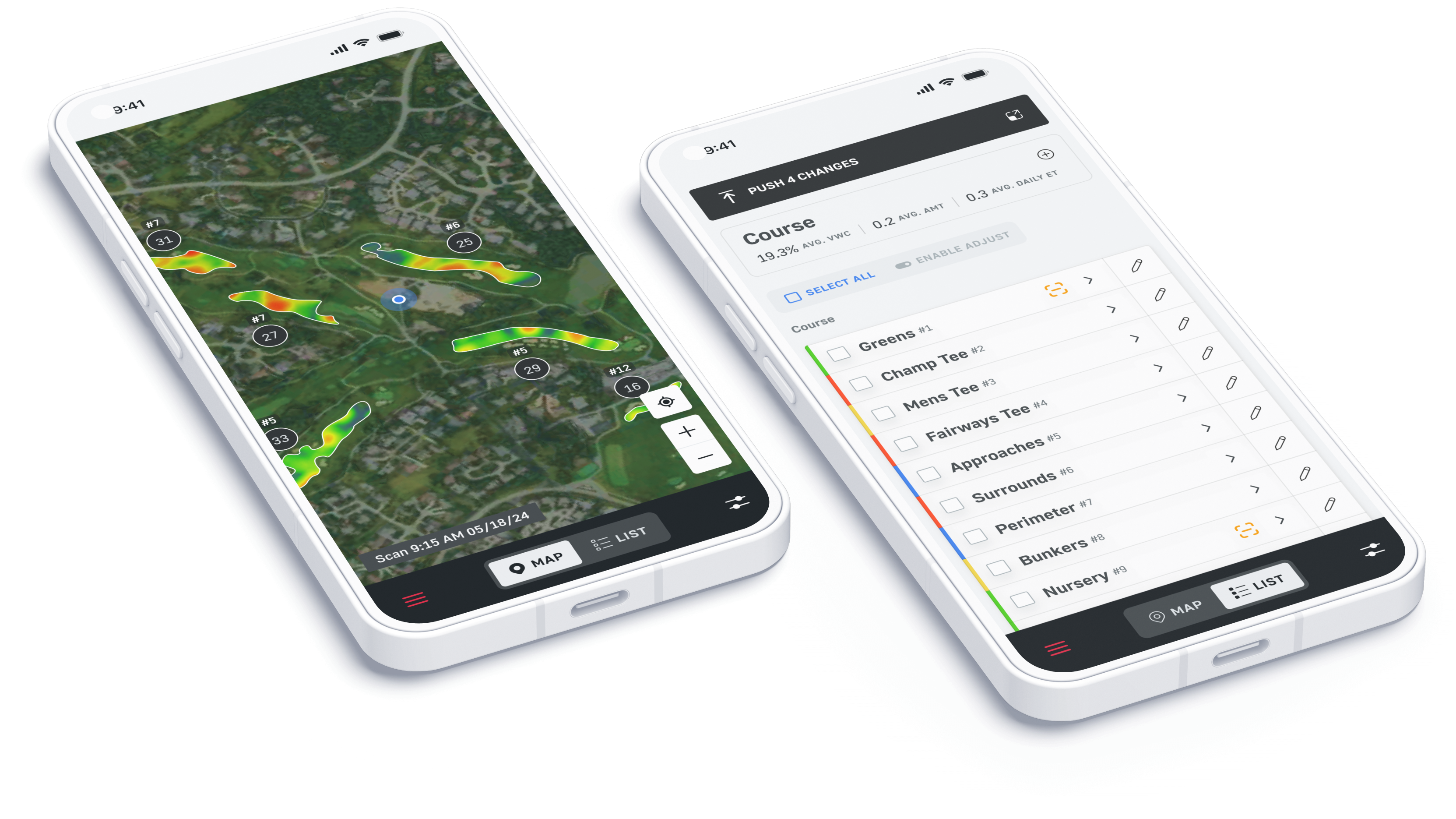
Mobile review keeps map-linked recommendations available where irrigation work happens.
The recommendation flow separates the result from the rationale so users can scan the decision first, then inspect the supporting evidence when needed.
The UI identifies what changed and why the system thinks action is needed.
Recommendation strength is visible before the user commits to an action.
Past actions and sensor context remain available during review.
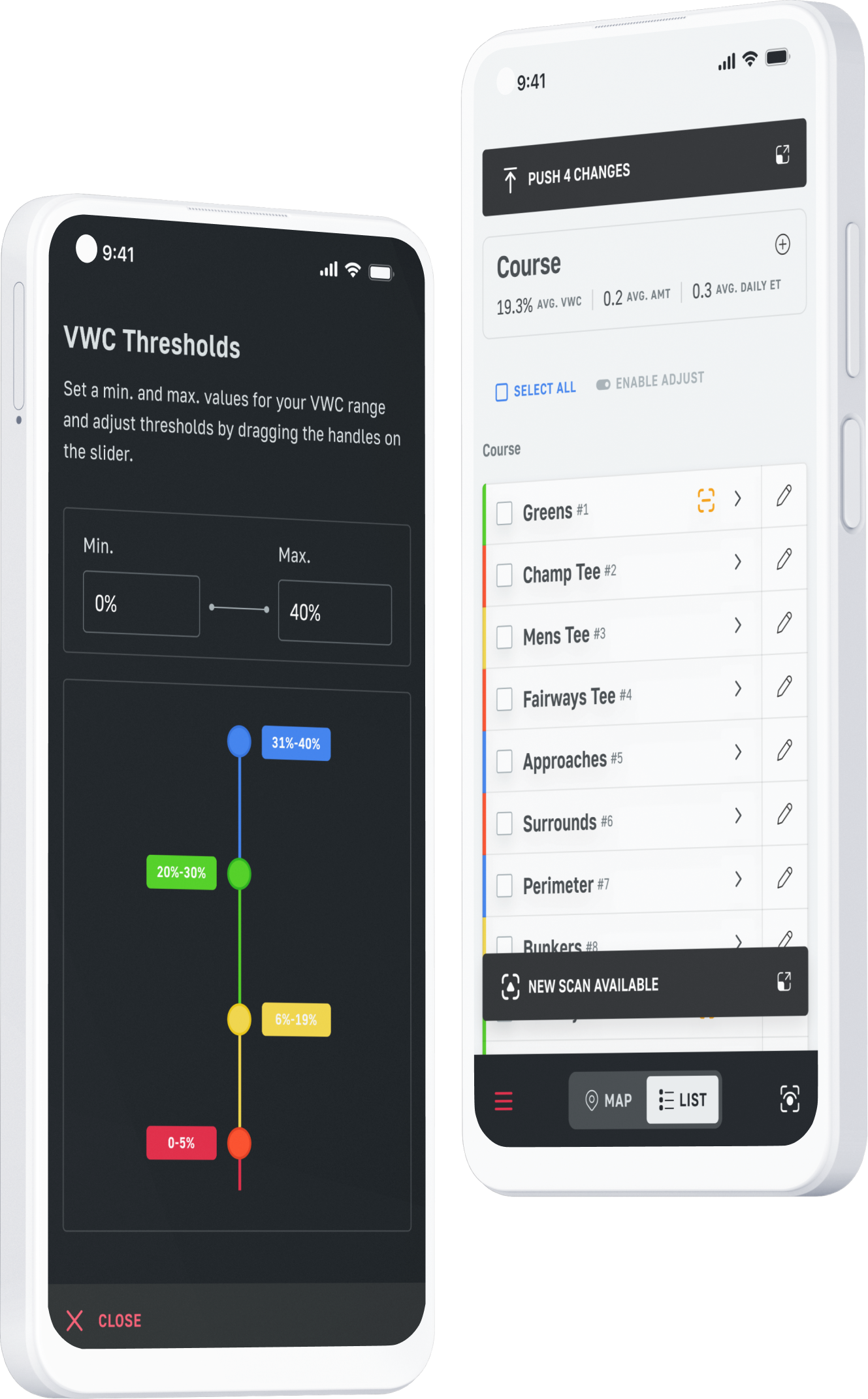
Override controls stay close to the recommendation so AI remains an assistant, not an authority.
The final flow supports accept, adjust, and reject states so teams can act quickly while still preserving expert judgment and operational accountability.
Apply the recommendation when evidence and confidence are aligned.
Tune the recommendation without leaving the review workflow.
Decline a recommendation while preserving the rationale for future model review.
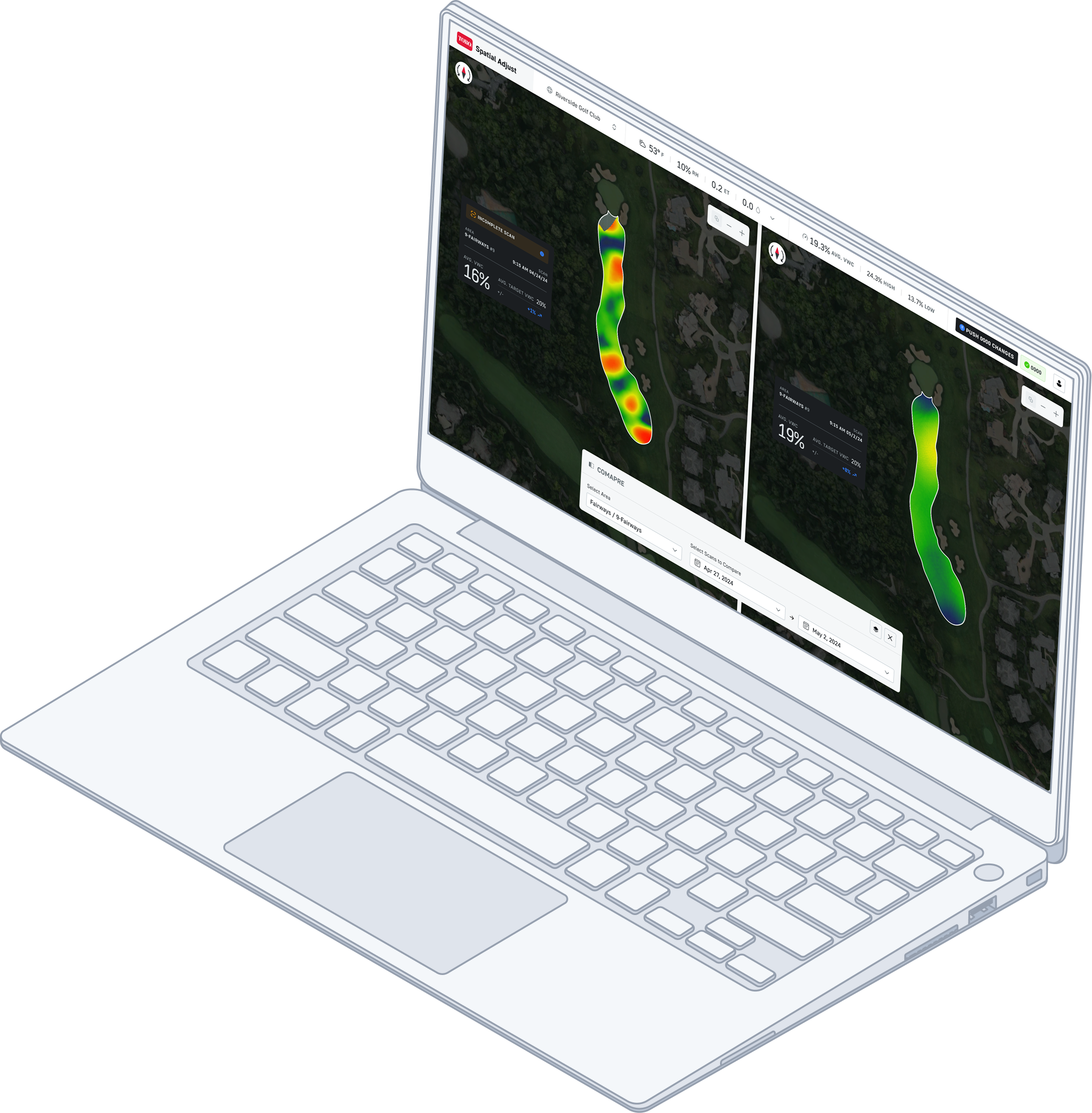
The final review state closes the loop between AI recommendation, expert decision, and operational follow-through.
The interaction model was distinct enough to support patent work around mobile governance for predictive irrigation.
The spatial logic and review patterns supported patent application 20240260521. More importantly, the product direction clarified how Toro could pair sensor intelligence with expert control instead of treating automation as an all-or-nothing decision.


